
Game drives
Morning and afternoon drives in an open-roof 4x4, with a packed lunch on full days out on the plains.
Fourteen thousand square kilometres of open plain, and the only place in Tanzania where you can watch the migration move.

The Serengeti is the largest and best known of Tanzania's national parks — 14,750 square kilometres running from the Ngorongoro highlands north to the Kenyan border. Its name comes from the Maa word siringet, meaning the place where the land runs on forever, which is an accurate description of the southern plains.
Best months: Jun to Oct, Dec to Mar
What Serengeti is known for.
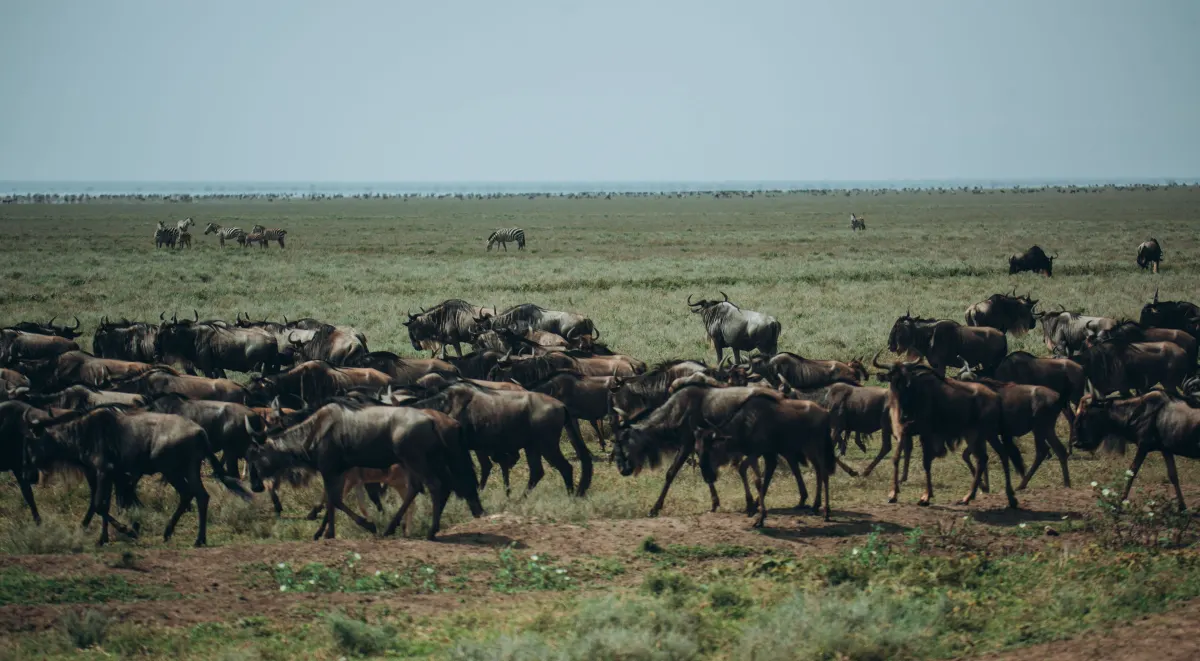
The Great Migration — roughly 1.3 million wildebeest and 250,000 zebra moving in a continuous annual circuit
Excellent lion and leopard viewing in the Seronera valley
Cheetah on the open short-grass plains in the south
Year-round game — resident wildlife stays even when the herds have moved on
Tap a photo to see it larger.
The main things people come for.
Morning and afternoon drives in an open-roof 4x4, with a packed lunch on full days out on the plains.
Camps and routes are chosen around where the herds are in your month: calving in the south, the Grumeti in the west, the Mara River in the north.
The Seronera valley has resident lion prides, and leopards in the sausage trees along the river. Cheetah prefer the open plains in the south.
An optional dawn flight over the plains, landing to a bush breakfast. It needs to be booked in advance.
Sightings depend on the season and on luck. Your guide will tell you where to look.
The best months for Serengeti, and what each season is like.
Open all year. December to March puts the herds on the southern calving plains. June to July is the western corridor and the Grumeti. July to October is the northern Mara River crossings. April and May are wet, green and much quieter, with lower rates.
A day by road, or a short flight
A full day from Arusha through the Ngorongoro highlands, entering at Naabi Hill. Most routes combine it with Ngorongoro on the way in or out.
A short scheduled flight from Arusha to an airstrip inside the park. It saves most of a day of driving and suits shorter trips.
Possible if you fly in, but you only see one part of the park.
The minimum that makes the journey worth it.
Time for the central valley and a second area, or to follow the herds.
Almost always combined with Ngorongoro, and usually with Tarangire on the way in. Three nights is the minimum that makes the drive worth it; four or five is better.
The kinds of places we use here. Named camps and lodges come with your itinerary draft.
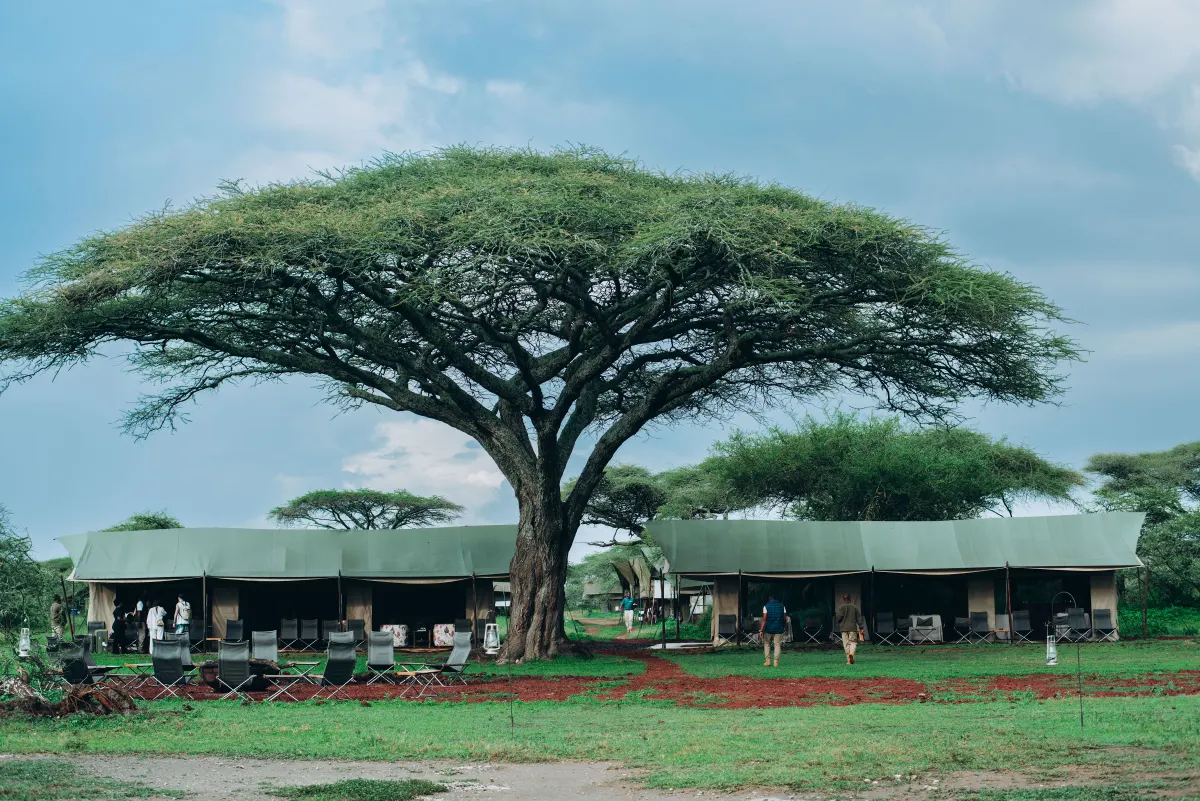
Small camps that move with the season, so you sleep close to the herds. They range from simple to comfortable depending on budget.
Permanent lodges, mostly in the central Serengeti. Good for a longer stay in one place.
Small things that make the visit easier.
The park is open all year. The herds are in the south from December to March, in the west in June and July, and in the north from July to October. April and May are wet and much quieter.
Yes. Game drives are in 4x4 vehicles and the tracks are rough. Our safaris use a private 4x4 with a pop-up roof.
Yes. A short flight from Arusha to an airstrip in the park saves most of a day, and suits shorter trips.
Three nights is the minimum that makes the journey worth it. Four or five is better.
Routes to start from. Each one can be changed.
The classic northern circuit at an unhurried pace. Two full nights in the Serengeti, so you are in the park at dawn rather than driving toward it.

Built around where the herds actually are. Camps move with the season — the calving grounds in the south from January, the western corridor mid-year, the northern rivers from July.
Six days on the northern circuit, then a short flight to the coast. Safari first, beach second — in that order, because nobody wants to leave the ocean for a 5am game drive.
Tell us your dates and who is travelling. We will suggest how long to stay and what to combine it with.